Beyond Seoul: Korea's Countryside Trip Guide 2026
You have three, maybe four days left in your Korea trip, and you keep asking yourself the same question: do you spend them all in Seoul, or do you take a chance on the countryside you have seen in photos but never quite planned for? It is a fair worry. Korea's rail and bus networks are excellent, but if you have never used them, the idea of navigating a village outside the capital with no English signage can feel like a gamble you are not sure is worth taking.
Here is the honest answer: rural Korea rewards the traveler who plans a little, and it is far more reachable than it looks on a map. You do not need a car, a Korean-speaking companion, or a week of extra time. You need a realistic sense of distances, a couple of specific destinations that suit what you actually want to see, and a plan for the logistics that trip up most first-timers.
This guide walks through four countryside regions that different types of travelers gravitate toward, how long each actually takes to reach from Seoul, and what to expect once you get there. None of it requires abandoning your Seoul itinerary entirely.
How Far Is Rural Korea, Really, From Seoul?
The biggest misconception is that leaving Seoul means losing a full day to transit. For most of the destinations travelers ask about, that is not true.
Korea's high-speed KTX network, operated by the Korea Railroad Corporation, connects Seoul Station and Yongsan Station to cities across the country in one to three hours, and intercity buses fill in the gaps for smaller towns that trains do not reach directly, according to the Korea Railroad Corporation (https://www.letskorail.com). You can realistically treat many rural destinations as single overnight trips or even long day trips, not multi-day expeditions.
The practical question is not whether you have time, but which region matches what you actually want: a preserved traditional village, a wetland and coastal landscape, a short nature escape, or a working agricultural landscape you can walk through. The next four sections break those down by what each place is actually for, since guidebooks often lump them together as if they were interchangeable.
Why Andong Hahoe Folk Village Is the Classic Starting Point
If what you picture when you think 'rural Korea' is a village of tile-roofed and thatched-roof hanok arranged along a curve of river, that is Hahoe. It is a lived-in village, not a reconstruction, and around 130 residents still occupy some of the original houses, which is part of why UNESCO inscribed it, together with Yangdong Village, as a World Heritage Site in 2010 under the listing Historic Villages of Korea, per the UNESCO World Heritage Centre (https://whc.unesco.org).
From Seoul, you take the KTX to Andong Station (roughly two hours), then a local bus or taxi covers the remaining 20 to 25 minutes into the village itself. Budget half a day for the village proper, longer if you want to catch a Hahoe Byeolsingut Talnori mask dance performance, which runs on a set weekend schedule rather than daily.
The why here matters: this is one of the few places where you are walking through an actual functioning community, not a preserved-for-tourists set piece, so pace and quiet matter more than a checklist of photo stops.
Can You Get Wetlands and Coastal Scenery in the Same Trip?
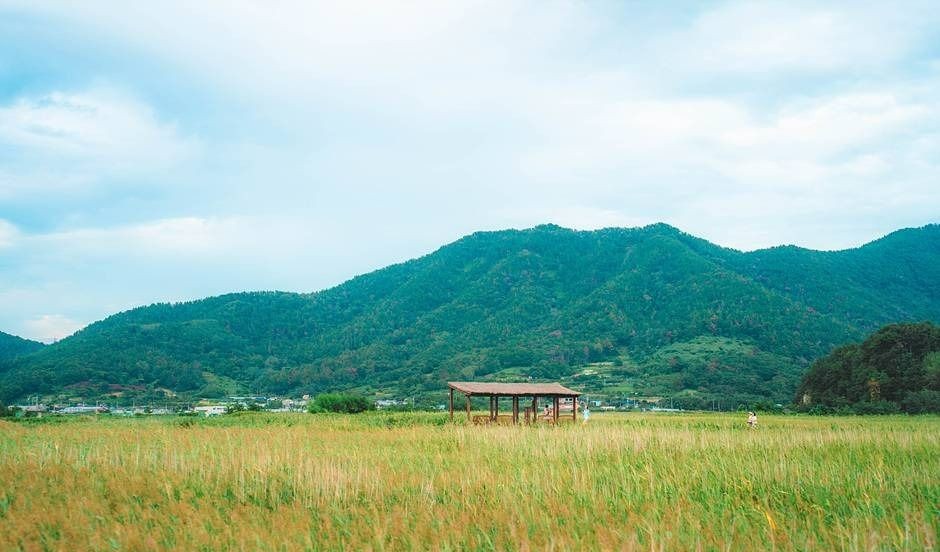
If village architecture is not what draws you and you are more interested in landscape, Suncheon on the south coast is the better fit. Suncheon Bay's tidal wetland was designated a Wetland of International Importance under the Ramsar Convention in 2006, one of the reasons it is protected rather than developed, according to the Ramsar Convention Secretariat (https://www.ramsar.org). The reed fields and mudflats support migratory birds for much of the year, and an observation platform on Yongsan lookout point gives you the reed-field views you have likely seen in photos.
Getting there from Seoul takes longer than Andong: a KTX to Suncheon or a connection through Yeosu, plus a local bus, adds up to roughly three to four hours each way. That is why this destination works best as an overnight trip rather than a same-day round trip, especially if you also want to see the adjacent Suncheonman Bay National Garden.
The honest tradeoff: Suncheon delivers a very different kind of countryside experience, quieter and more nature-focused, but it costs you more travel time than Andong does.
Is There a Countryside Escape Close Enough for a Single Day?
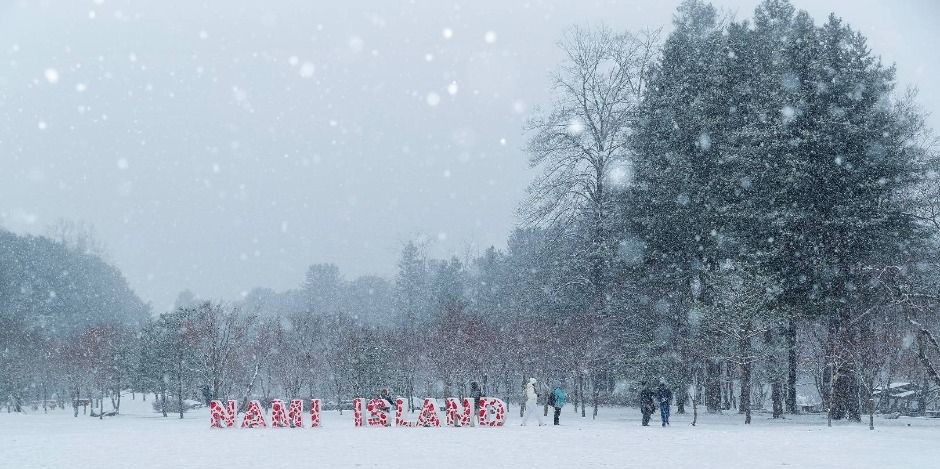
Not every trip has room for an overnight stay, and if that is you, Nami Island is the realistic option. It sits on the Bukhan River in Gapyeong County, about 60 to 90 minutes from Seoul by ITX train or shuttle bus combined with a short ferry crossing, based on scheduling information published by the Korea Tourism Organization (https://english.visitkorea.or.kr).
What you get is a half-island of tree-lined paths, most famously the metasequoia avenue, and a noticeably slower pace than central Seoul. It is not a remote rural village experience in the way Andong is, and it is worth saying plainly: Nami Island is popular and can feel crowded, particularly on weekends and during spring and autumn foliage season.
The reason it still belongs on this list is practical, not romantic: it is the countryside experience you can fit into a single day without rearranging your whole itinerary, which makes it the right answer for travelers who want a taste of rural scenery without giving up a Seoul day.
What Should You Know Before You Go?
A few practical realities apply across all of these trips, and they are the ones that catch first-time visitors off guard.
English signage thins out quickly once you leave Seoul and its major stations. Download a translation app before you go, and screenshot your destination's name in Korean script so you can show it to a bus driver or taxi if needed. Card payment coverage is generally good in Korea, but small rural guesthouses and food stalls sometimes prefer cash, so carry some Korean won as backup.
Seasonality changes the calculation more than most travelers expect. Boseong's green tea terraces, a working agricultural landscape rather than a manicured park, are at their most vivid in late spring and are the site of the annual Boseong Green Tea Festival, timed around that peak growing season, according to the Korea Tourism Organization (https://english.visitkorea.or.kr). Visiting rural Korea in deep winter is completely possible, but you are trading green terraces and reed fields for a starker, quieter landscape, which some travelers actually prefer.
Booking accommodation in rural towns should happen further in advance than in Seoul, simply because there are fewer rooms to begin with, not because demand is unusually high.
Final Thoughts
There is no single right answer to whether you should leave Seoul, and that is genuinely fine. A traveler who wants architecture and living history will get more out of Andong than someone chasing open landscapes, who will feel more at home in Suncheon or Boseong, and a traveler with only one spare day is better served by Nami Island than by forcing a longer trip that eats into the rest of the itinerary.
What matters is matching the destination to the trip you are actually taking, not the one you feel like you should be taking. Korea's countryside is close enough, and well-connected enough by KTX and intercity bus, that you can test it out without much risk.
Not sure whether you are the type of traveler who wants a slow village morning or a landscape day trip? A quick sense of your own travel style makes it much easier to pick the right region.
Take our Korea travel style quiz to get a countryside pick that actually matches how you like to travel.
Find your Korea travel style →