Seoul Mural Villages: Are They Still Worth a Visit?
If you have seen those photos of a Seoul stairway covered in giant painted koi fish, or a wall of sunflowers so bright it looks hand-drawn, you have probably already typed "Seoul mural village" into a search bar and wondered: is that place still there, and is it actually worth a detour from Gyeongbokgung or Myeongdong?
It is a fair question, and the honest answer is a little more complicated than the Instagram grids suggest. Some of the most famous murals in Seoul's best-known painted neighborhood have genuinely been painted over, and not by accident. Understanding why matters just as much as knowing where to point your camera, because these are lived-in neighborhoods, not outdoor museums built for tourists.
This guide walks you through what is realistically left to see, which newer painted streets can fill the gap, and how to visit without becoming the reason the next mural gets removed too.
Is Ihwa Mural Village Still Covered in Murals?
Ihwa Mural Village sits on the lower slope of Naksan, in a neighborhood that was originally slated for redevelopment. Around 2006, the government-backed Naksan Project brought in artists to paint public art across the alleys as a way to brighten a low-income hillside district, and by the early 2010s two stairways in particular, one lined with painted koi fish and another with sunflowers, had become some of the most photographed spots in the city.
That popularity is exactly what changed things. The neighborhood is made up of narrow residential lanes with real front doors, and as visitor numbers climbed, so did complaints from residents about noise, litter, and tourists peering into windows for a better shot. In 2016, a group of frustrated homeowners repainted over the fish and sunflower stairs themselves, a protest that made national news in Korea.
So if you go expecting the exact fish stairs from a five-year-old travel blog post, you will likely be disappointed. What you will find instead is a patchwork: some murals have been restored or refreshed by the district office since then, others remain gone, and new smaller pieces appear and disappear over time. It is still a genuinely pleasant, art-filled walk up a Seoul hillside, just not the single perfect photo backdrop it once was.
To get there, take Seoul Subway Line 4 to Hyehwa Station, exit 2, then walk uphill for roughly 10 to 15 minutes. There is no admission fee, since this is an open residential street, not a ticketed attraction.
Why Pair Your Walk With Naksan Park?
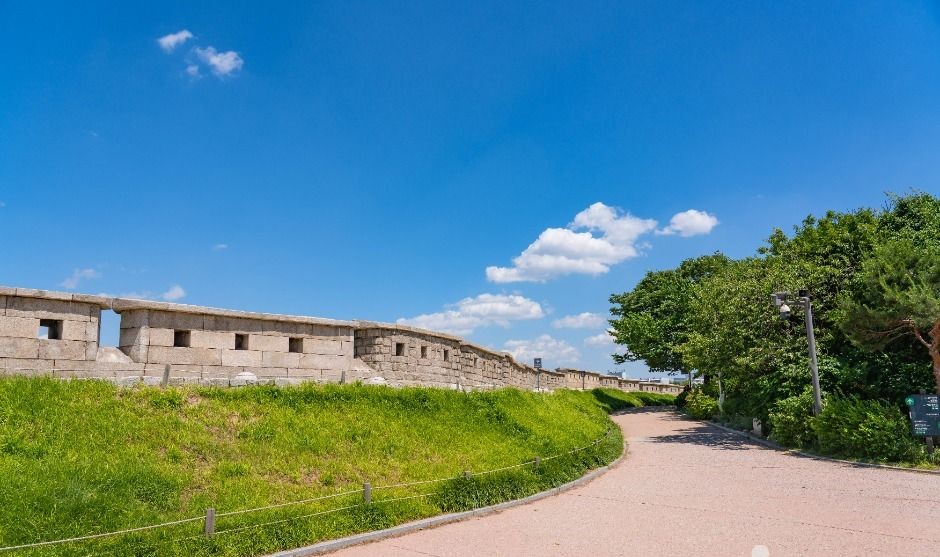
Because Ihwa Mural Village sits directly on Naksan's slope, you can combine it with Naksan Park in a single walk, and honestly, you should. Naksan Park caps the low mountain at roughly 125 meters and includes a restored stretch of the Seoul City Wall, officially designated a historic site by Korea's Cultural Heritage Administration (https://www.cha.go.kr), which built and rebuilt the fortress wall around old Seoul starting in 1396.
Walking the wall path from Naksan Park gives you a wide view over the low rooftops of Ihwa-dong and, on a clear day, the Namsan tower in the distance. It is a useful reset if the mural alleys feel a bit deflating after reading about their history, because the wall walk itself is unambiguously intact and free to enter, with no residents to disturb.
The park and wall trail are typically open to walk through daylight hours and into the evening, with some sections lit after dark, though exact lighting hours shift seasonally, so it is worth checking the Seoul Metropolitan Government's tourism information (https://english.seoul.go.kr) before planning an evening visit.
Budget about 30 to 40 minutes for the wall section alone if you want to actually stop and look at the view, on top of whatever time you spend in the mural alleys below.
Where Can You Find Quieter, Whimsical Murals Instead?
If Ihwa's mixed state leaves you wanting a fuller, less patchy version of a painted village, Songwol-dong Fairy Tale Village is worth adding to the list. It sits near Seodaemun, on a steep stairway neighborhood that went through its own urban regeneration project, with murals themed around fairy tales like Alice in Wonderland and The Little Prince painted across walls and stair risers.
The why here matters too: this project came later and on a smaller scale than Ihwa's, which is part of why it has drawn less tourist traffic and, so far, fewer resident complaints. It gives you a genuinely comic-book-bright walk without the crowding that made Ihwa's situation difficult in the first place.
Get there via Seoul Subway Line 3 to Dongnimmun Station, then walk uphill through the neighborhood past Independence Gate Park. It is a real climb, so wear shoes you do not mind on stairs, and go slowly, both for your own legs and because these stairways double as the daily walking route for people who actually live there.
Is Mullae Art Village a Different Kind of Painted Street?
If you are drawn to Seoul's mural scene because you like street art and graphic style more than folk-art fish and flowers, Mullae Art Village in Yeongdeungpo answers a different question entirely: what happens when working artists move into a still-active industrial district.
Mullae-dong was, and largely still is, a neighborhood of small metalworking and machine-tool workshops. Starting in the 2000s, cheaper rents drew artists into the same alleys, and studios now sit beside working ironworks, sometimes literally next door to each other. The Seoul Foundation for Arts and Culture (https://www.sfac.or.kr) has supported artist residencies and cultural programming in the district as part of the city's broader push to keep creative communities in older industrial neighborhoods rather than pricing them out.
The result is grittier and more contemporary than Ihwa's painted stairways, closer to graphic novel panels and large-scale graffiti than pastel folk murals, and it changes more often since working artists keep adding new pieces. Take Seoul Subway Line 2 to Mullae Station and wander the blocks around exits 3 and 4.
How Do You Visit a Mural Village Without Becoming the Problem?
Given that Ihwa's own murals were partly removed because of visitor behavior, this is worth answering directly rather than skipping past. These neighborhoods are somebody's actual street, which is exactly why the etiquette here is not optional politeness, it is the reason some of these places still exist to visit at all.
Keep your voice down, particularly in the morning and evening when residents are commuting or settling in. Do not knock on doors or peer through windows for a photo, and be mindful that a narrow stairway that makes a great photo composition is also someone's only way to carry groceries home. Avoid flying a drone over any of these areas, since it is both intrusive and, in many parts of central Seoul, restricted airspace near government buildings.
If you would rather have someone else navigate the etiquette and the history at the same time, a small-group guided walking tour through Klook, Trazy, or GetYourGuide can be a reasonable option here, since a local guide typically knows which alleys are currently open to visitors and which are asking to be left alone this season. This article contains affiliate links, and HealthTravelLab may earn a commission if you book through them, at no extra cost to you.
Visiting on a weekday, outside of peak midday hours, remains the simplest thing you can do to reduce your footprint while still getting the walk and the photos you came for.
Final Thoughts
So is Seoul's mural village trail still worth it in 2026? It depends on what you are actually hoping to find. If you want the exact fish-and-sunflower stairs from an old blog post, you will be a little disappointed by Ihwa. If you are open to a walk that mixes history, a few surviving murals, a genuine city wall view, and maybe a second or third neighborhood with a different personality entirely, there is a real and worthwhile day here.
The right combination really does come down to your own travel style, whether that is a slow, photo-focused wanderer, someone who wants context from a guide, or someone happier discovering a gritty working district than a postcard-pretty one.
Not sure whether you are the slow-wander type, the guided-tour type, or the go-find-the-edgy-neighborhood type? Take our quick Korea travel style quiz to find out.
It takes two minutes and points you toward the parts of Seoul that actually match how you like to travel.
Find your Korea travel style →