Unique Korea Souvenirs: What to Actually Buy in Seoul
Is Seoul actually a good place to shop for unique souvenirs, or will you come home with the same keychains and magnets everyone else has?
If you have spent any time scrolling souvenir shop reviews before a Seoul trip, you already know the frustration. Most of what lines Myeongdong's main strip is mass-produced and made anywhere but Korea. You want something that actually says you were here, whether that is a genuinely old object, a handmade craft, or even something more permanent like ink on your skin.
This guide walks through the honest options, including the ones travel blogs tend to gloss over, like the legal gray area around tattoos in Korea. You will find out where locals actually source vintage pieces, which crafts are worth the extra suitcase space, and what rules apply if you want a souvenir that goes home on your body rather than in your bag.
Is it actually legal to get a tattoo while visiting Seoul
This is the question most travel guides skip entirely, and it matters if a permanent souvenir is on your list. In South Korea, tattooing is legally classified as a medical procedure under the Medical Service Act, and the Constitutional Court of Korea has upheld that classification in recent rulings, meaning only licensed medical professionals are technically authorized to perform tattoos, according to the Constitutional Court of Korea (https://english.ccourt.go.kr).
In practice, this means the tattoo studios you will see clustered around Hongdae and Yeonnam-dong operate in a legal gray zone. Enforcement against artists does happen occasionally, but tourists getting tattooed are essentially never targeted, which is why the scene has grown into one of the most respected in the world despite the ambiguous legal footing.
You will want to book ahead, since well-reviewed studios in this area often have waitlists of several weeks, and many require you to send reference images over Instagram DM before they will confirm an appointment. Prices vary widely by artist and size, so treat any number you see online as a starting estimate rather than a quote.
If the legal ambiguity makes you uneasy, that is a completely reasonable reaction, and it is worth sitting with before you book anything.
Where do you actually find vintage, one-of-a-kind pieces in Seoul
If a mass-produced fridge magnet feels wrong for a trip like this, the flea markets are where you want to spend an afternoon instead. Dongmyo Flea Market, held near Dongmyo Shrine, is where Seoul's older generation has sold secondhand goods for decades, and it is genuinely chaotic in the best way. You will find vintage cameras, old vinyl records, military surplus jackets, hand-painted signage, and coins spread across tarps on the sidewalk.
The reason this works better than a souvenir shop is simple: nothing here was made for tourists. Sellers are often the same people who have run a stall for twenty or thirty years, which means prices are negotiable and quality is inconsistent, so you do need to look items over closely.
Go on a weekday morning if you want to browse without shoulder-to-shoulder crowds, since weekends draw both bargain hunters and curious younger Koreans discovering the market through social media.
What souvenirs actually reflect Korean craft, not just Korean branding
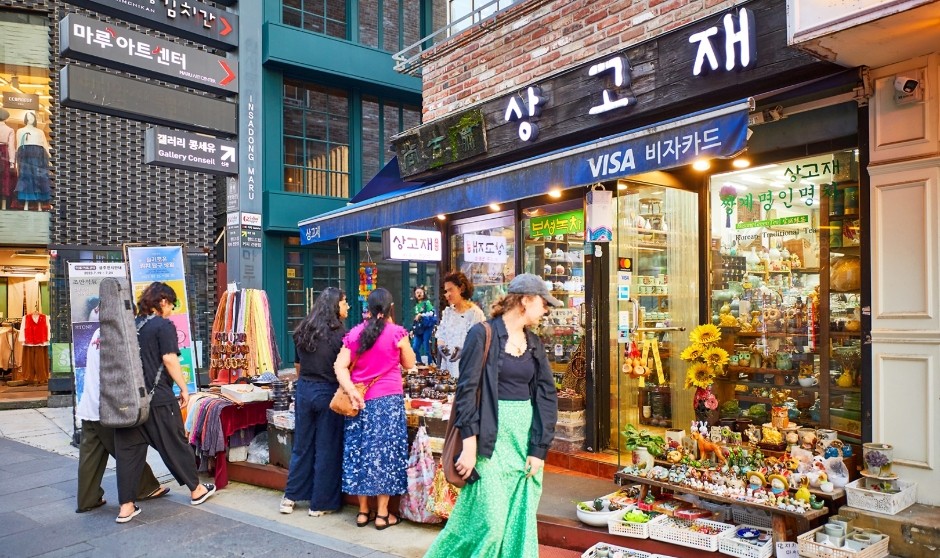
Insadong is the obvious answer here, and it earns that reputation. This is the neighborhood for hanji, traditional handmade mulberry paper used in everything from lampshades to stationery, and for dojang, the personalized stone or wood stamps used in place of signatures. A dojang carved with your name in Korean characters is a genuinely personal object, and shops around Insadong will usually carve one while you wait.
You will also find celadon pottery here, the pale green-glazed ceramics with a production history stretching back centuries in Korea. Quality varies enormously, from tourist-grade pieces to museum-quality reproductions, so it is worth asking a shopkeeper to explain what makes a piece higher-grade before you pay a premium.
The reason this neighborhood beats a department store souvenir floor is that many of these shops are still run by the artisans themselves or by families who have kept the trade going, so you are paying for skill, not just a Korea-themed design printed on a factory item.
If you plan to buy anything that looks genuinely old rather than newly handmade, there is a rule worth knowing before you fall in love with an antique sign or artifact. Items recognized as cultural heritage, or objects an appraiser determines to be of significant historical value, may require an export review or permit before they can legally leave the country, per the Cultural Heritage Administration of Korea (https://english.cha.go.kr). This mostly applies to genuinely old artifacts rather than reproduction pieces sold as souvenirs, but if a dealer is selling something as a real antique, ask them directly whether it is export-cleared.
What about semi-permanent souvenirs, like eyebrow tattoos or K-beauty treatments

Somewhere between a fridge magnet and a full tattoo sits a category of souvenir a lot of travelers do not think to look for: semi-permanent cosmetic tattooing, most commonly eyebrow microblading or lip tinting. This falls into a different, more tolerated category than body tattoos, since the pigment used is designed to fade over one to three years rather than stay permanently, and many of these studios operate more openly, often inside beauty clinics.
Myeongdong and Gangnam both have dense clusters of these studios, and you will notice many cater specifically to visiting tourists with English-speaking staff and package pricing that includes a touch-up visit, though touch-ups obviously are not realistic to schedule if you are only in Seoul briefly.
You will want to research a studio's actual technician credentials rather than booking on price alone, since results are visible on your face for months. This is a cosmetic and wellness service, not a medical treatment, so treat before-and-after photos on social media as marketing rather than a guarantee of your own result, and consult a licensed professional about your specific skin and any allergies before booking.
Can you actually bring food, skincare, or ginseng souvenirs home with you
Korean ginseng, dried seaweed, and gochujang are some of the most popular edible souvenirs, and most are fine to bring home in reasonable personal quantities, but the rules depend on both Korea's export rules and your destination country's import rules, which is the part travelers most often overlook.
Certain agricultural and plant-based products, particularly fresh or raw items, are subject to quarantine restrictions when leaving Korea, and the Animal and Plant Quarantine Agency publishes current guidance on what requires a certificate for export, according to the Animal and Plant Quarantine Agency (https://www.qia.go.kr). Sealed, commercially packaged items like processed ginseng products or dried goods sold specifically for travelers are almost always the safer choice over anything fresh or homemade.
Separately, if you plan on a bigger shopping trip for K-beauty products at duty-free retailers, Korea Customs Service periodically updates the purchase limit allowed for outbound travelers at duty-free shops, so it is worth checking the current cap before you go on a buying spree, per Korea Customs Service (https://www.customs.go.kr).
If skincare is your main souvenir category, Olive Young and YesStyle remain the most reliable places to stock up on Korean beauty products at a wide range of price points, and both are worth a look if K-beauty is a bigger part of your trip plan than vintage hunting or crafts. This article contains an affiliate link; we may earn a commission at no extra cost to you if you book through it.
Final Thoughts
There is no single right answer here, and that is genuinely fine. A traveler chasing a design-forward trip might spend an entire afternoon at Dongmyo hunting for one perfect vintage piece, while someone else might care more about a small, meaningful tattoo, and someone else entirely just wants good skincare and a dojang stamp to bring home. What matters is picking the souvenir category that matches how you actually like to travel, not what looked best in someone else's Seoul recap video.
If you are still figuring out what kind of Korea trip actually suits you, that is worth thinking through before you land, not after.
Take a couple of minutes to find your travel style, and let it point you toward the right kind of Seoul souvenir hunt.
A short quiz can help match your travel personality to the itinerary, neighborhoods, and yes, souvenir stops that will actually feel worth it.
Find your Korea travel style →