Unique Korea Souvenirs: Vintage Finds to Travel Tattoos
Is there more to Korean souvenirs than another sheet mask multipack and a phone case from Myeongdong? If you've searched this question, you're already ahead of most first-time visitors, who end up with a suitcase full of things they could have bought at a duty-free shop back home.
Seoul actually has a strong secondhand, vintage, and small-maker scene, tucked into specific neighborhoods most tour buses skip. You just need to know where those neighborhoods are, what's realistic to carry home, and which trendy souvenir ideas (like a small tattoo) come with legal fine print worth reading before you commit.
This guide walks through five categories of souvenirs, ordered roughly by how far off the typical tourist path they are, plus the practical logistics (cost ranges, opening patterns, export rules) so you can plan a souvenir run that isn't just an afterthought at the airport.
Where do you even start if you want something more original than a keychain?
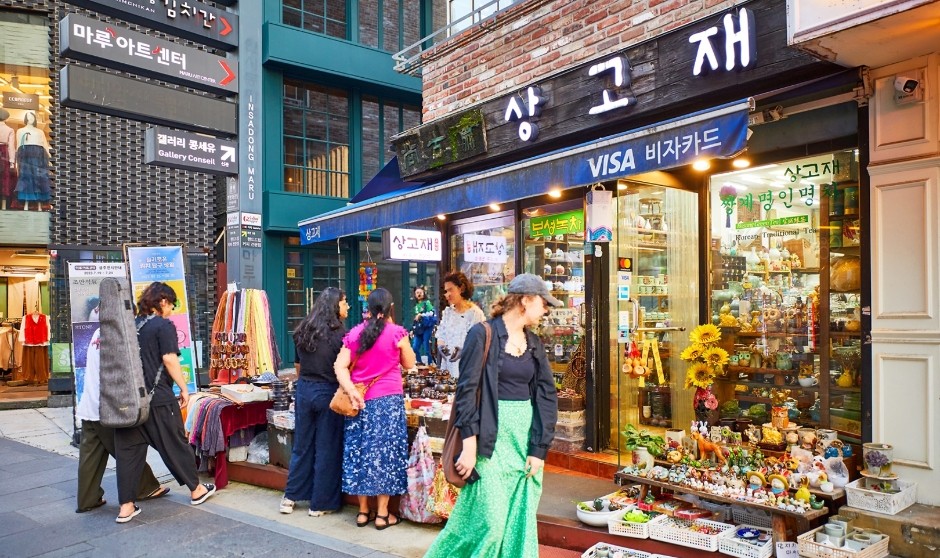
Insadong is the obvious starting point, and it earns that reputation. The main street and the Ssamziegil shopping complex inside it are packed with small stalls selling handmade paper goods, ceramics, calligraphy brushes, and jewelry from independent Korean makers rather than mass-produced imports.
The reason this area works well for souvenir hunting is density: you can compare ten versions of the same hanji (traditional mulberry paper) notebook or celadon cup within a five-minute walk, instead of hoping one gift shop has what you want.
Most shops open around 10:30 or 11 a.m. and run until 8 or 9 p.m., and the pedestrian street itself is closed to most vehicle traffic on weekends, which makes browsing easier but also busier. Expect to pay roughly 10,000 to 40,000 KRW (about 7 to 30 USD) for small handmade items like coasters, pouches, or ceramics, more for larger pottery pieces.
Are those vintage neon signs you see on Instagram actually for sale?
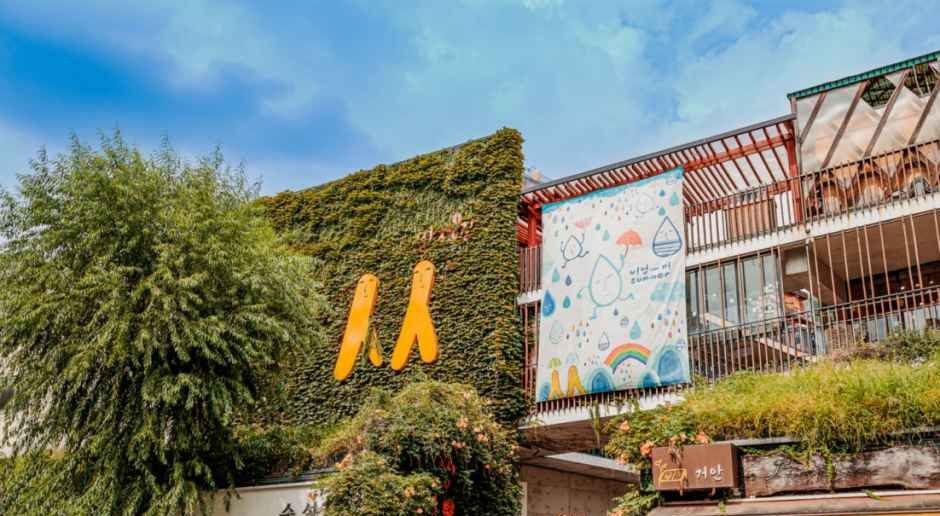
Some of them, yes, though not usually the exact sign hanging on a building. Euljiro is Seoul's old printing, hardware, and lighting district, a maze of narrow alleys where small family-run workshops have made metal signage, neon, and letterpress prints for decades, sitting right next to newly opened bars and cafes that moved in for the retro atmosphere.
Why this matters for souvenirs: several of these sign-makers and printers will take small custom orders, a nameplate, a short phrase, a reproduction of an old-style shop sign, for tourists as well as local businesses. It's a genuinely unique souvenir because it's made by hand in front of you, not stocked on a shelf.
Custom small signage or letterpress prints typically run from about 30,000 to 150,000 KRW (roughly 22 to 110 USD) depending on size and material, and turnaround can range from same-day to a few days, so this isn't a last-minute-before-your-flight errand.
Is there a real flea market for antiques and secondhand finds, or is that just a tourist rumor?
There is, and it's real: Dongmyo Flea Market, spread across the streets around Dongmyo Shrine station (subway lines 1 and 6), is one of Korea's largest secondhand markets, with vendors laying out vintage clothing, old cameras, records, coins, and general antiques.
The market is busiest, and most fully stocked, on weekend mornings into early afternoon, when the widest range of vendors set up. Prices are informal and often negotiable, expect anywhere from 5,000 to 50,000 KRW (about 4 to 37 USD) for smaller vintage clothing or trinkets, more for genuine antiques or collectible items.
Here's the part worth explaining rather than skipping: if you buy something that looks genuinely old, a hand-painted item, old furniture, traditional artwork, Korea's cultural heritage rules can apply. Items suspected of being cultural properties, generally anything that appears to predate a certain age, may require an export review before they can legally leave the country, and inspection counters for this exist at Incheon International Airport, run jointly by customs and heritage authorities, Korea Heritage Service (https://english.khs.go.kr).
Is getting a semi-permanent travel tattoo in Seoul actually legal, and is it a good souvenir idea?
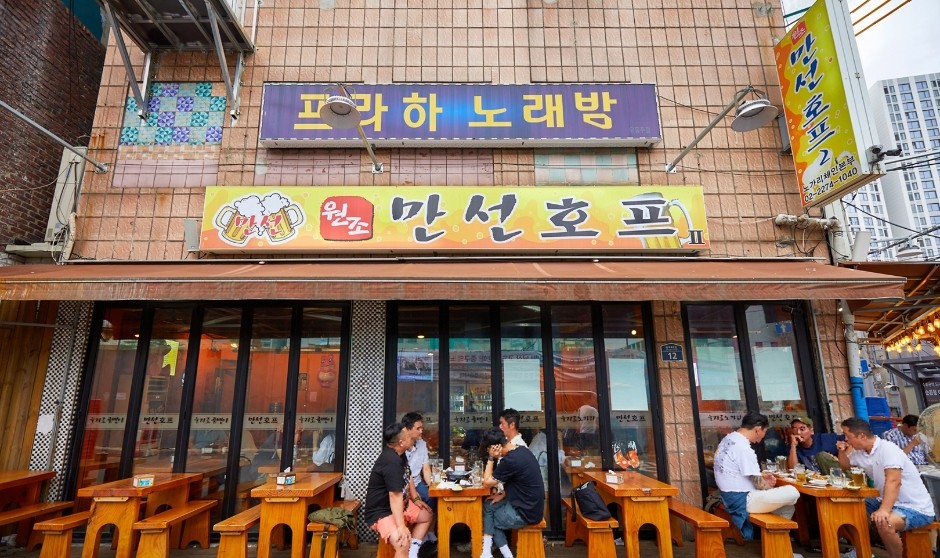
This is worth a straight answer because it trips up a lot of visitors: getting a tattoo, semi-permanent or permanent, from a small independent studio is extremely common in Seoul, especially around Hongdae, where a dense cluster of tattoo artists and micro-studios cater specifically to tourists wanting a small, minimalist design as a trip souvenir.
But the legal status is genuinely unsettled. Under Korea's current interpretation of the Medical Service Act, tattooing has long been treated as an act that only licensed medical professionals may legally perform, a position the Constitutional Court of Korea reaffirmed in a 2022 ruling, even while acknowledging the law hasn't kept pace with how widely tattoo studios actually operate, Ministry of Health and Welfare (https://www.mohw.go.kr). In practice, thousands of independent studios operate openly and are rarely enforced against, which is why you'll see them advertised freely, but that doesn't make the legal gray zone disappear.
So if a small tattoo is on your souvenir list, it's less a question of whether you can find a studio (you can, easily) and more about going in with clear eyes: check reviews for hygiene practices, confirm the ink and needles are single-use, and treat pricing quotes as current-day estimates rather than fixed, since studios set their own rates.
What's a realistic budget for all this, and how do you actually get fragile or bulky finds home?
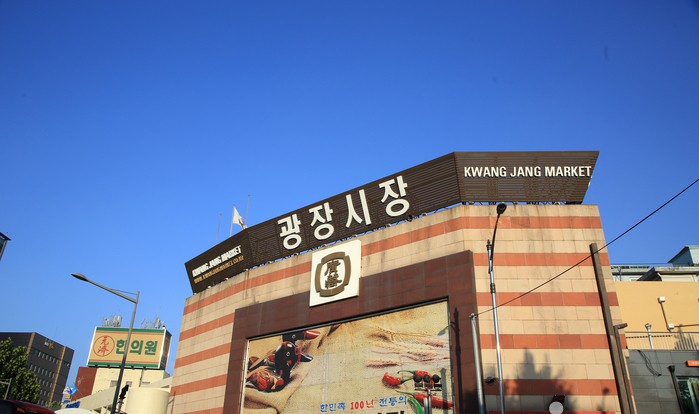
Gwangjang Market is worth adding to a souvenir itinerary for a reason beyond its famous street food: the upstairs sections still sell secondhand silk, hanbok fabric remnants, and vintage textiles, a quieter counterpart to the market's bustling food alleys downstairs. It's open daily, though some sections close on Sundays, so it's worth checking before a special trip.
For budgeting purposes, a reasonable souvenir trip across these categories, a small ceramic piece, a custom print, a flea market find, and maybe a textile scrap, lands somewhere between 50,000 and 250,000 KRW (roughly 37 to 185 USD) total, well below what a single designer souvenir at an airport shop often costs.
For getting things home: Korea does not charge export duty on personal souvenir purchases, but your home country's import allowance still applies, so check your own customs office's rules before you fly rather than assuming everything is duty-free on arrival. Fragile ceramics and framed prints are usually safest in a carry-on with bubble wrap, since checked luggage handling in transit is unpredictable regardless of airline.
Final Thoughts
None of this means you need to hit all five of these spots on one trip, or that a simple sheet mask souvenir is somehow the wrong choice. The right mix depends entirely on your own travel style: some travelers want one meaningful handmade object, others want a market afternoon of cheap vintage finds, and others are only half-serious about the tattoo idea until they see the studios in Hongdae in person.
What matters is knowing these options exist before you land, so you're choosing on purpose rather than defaulting to whatever's closest to your hotel on the last day.
Not sure whether your ideal Seoul trip leans toward slow market wandering, hands-on maker visits, or something bolder like a travel tattoo? Your travel style shapes which of these souvenir stops are actually worth your limited time.
Take the quick Korea Travel Style quiz to get a souvenir and itinerary shortlist matched to how you actually like to explore.
Find your Korea travel style →